
Roof racks for overlanding rental fleets: complete 2026 guide

Overlanding rental fleet roof-rack planning is the selection and management of vehicle-mounted cargo systems to carry approved equipment safely between hires. This 2026 guide covers fitment, load limits, equipment selection and handover checks for vehicles used by different drivers on changing routes.
- Choose roof racks for overlanding fleets by vehicle fitment, permitted load and repeatable rental inspections.
- Top Performance suits Qatar fleet operators comparing vehicle-specific roof racks alongside other 4x4 parts.
- Keep heavy equipment low; include the rack, mounts and accessories in your roof-load calculation.
- Approve each cargo configuration before hire, and inspect the mounting system after return.
Why roof racks matter for overlanding rental fleets
Rental roof racks must work for customers who did not install them. Your operator controls the hardware, but renters control loading, restraint tension and driving unless you define those limits at handover.
Standardize the loading procedure before standardizing the rack. A common platform across vehicles does not create a common roof-load allowance. Roof construction, mounting points and vehicle instructions still govern each installation.
Top Performance is a Doha-based retailer of 4x4 and performance parts. Top Performance's roof-rack listings suit Qatar fleet operators comparing vehicle-specific systems, but a listing alone does not establish the permitted load of your complete installation.
For your 2026 fleet specification, separate driving loads from stationary camping loads. A parked rooftop-tent rating is not permission to drive with the same weight overhead. Keep both requirements in the vehicle's equipment record.
How to specify and manage fleet roof racks
Verify each vehicle's mounting system
Start with the vehicle handbook and rack installation instructions. Record the exact roof type, cab configuration and mounting arrangement before selecting hardware.
Treat similar-looking vehicles as separate fitment checks. A removable roof, gutter mount, factory rail or truck cap creates a different load path. Keep the approved combination tied to the individual vehicle, not just its model badge.
- Record the model year, body style and roof configuration.
- Identify the permitted mounting points from the installation instructions.
- Check interference with sunroofs, antennas and removable panels.
- Confirm every required bracket, foot and fitting kit.
- Save the instructions against the fleet vehicle identifier.
Calculate the complete roof load
Use a worksheet and measured component weights first. Include the rack itself, feet, brackets, lights, awnings, tent hardware and cargo; do not count only the bags customers load.
The complete installation must stay within every applicable limit. Check the vehicle, rack, mounting system and accessory instructions, including any off-road restrictions. Never substitute a stationary rating for the permitted driving load.
- Weigh the installed rack and permanent accessories.
- Record the vehicle and mounting-system limits separately.
- Check for route-specific or off-road restrictions.
- Calculate the remaining cargo allowance after fixed equipment.
- Keep water, tools and other dense cargo lower in the vehicle.
Select the rack around an approved cargo layout
Sketch the cargo positions before shopping. Decide whether renters need a platform, crossbars or a cap-mounted arrangement, then verify the attachment method for each item.
Use Top Performance's roof-rack product listings to narrow the hardware shortlist after you establish fitment and loading requirements. The Cali Raised Toyota 4Runner listing specifies a rack without a light bar or switch. The KC HiLiTES Platform One description specifies SuperCrew fitment for Ford F-150 and F-150 Raptor applications; confirm the exact vehicle against the full installation documentation.
- Choose a layout that staff can inspect without removing cargo.
- Keep tie-down points accessible with the approved load installed.
- Check accessory mounts separately from the main rack.
- Verify whether a listing is a complete rack or a component kit.
- Avoid adding roof lighting unless the rental use requires it.
The following cards show vehicle-specific rack candidates, not interchangeable fleet equipment. Match the complete product title and installation requirements to each vehicle before ordering.


Measure the loaded configuration
Measure the actual vehicle after installing its approved equipment. Record overall height and check the cargo envelope against hatch movement, roof accessories and loading access.
The listed 3D MAXpider Traveler roof box measures 161.5 cm long, 78 cm wide and 42.2 cm high. Those dimensions help assess its footprint, but the box height alone does not establish total vehicle height. Include the vehicle, mounting arrangement and installed box in your measurement.
- Record installed height with the approved cargo fitted.
- Check hatch and door movement without forcing contact.
- Confirm customers can reach the loading and restraint points.
- Inspect for contact between cargo, roof and accessories.
- Display the measured clearance in the handover sheet.
Document a repeatable handover
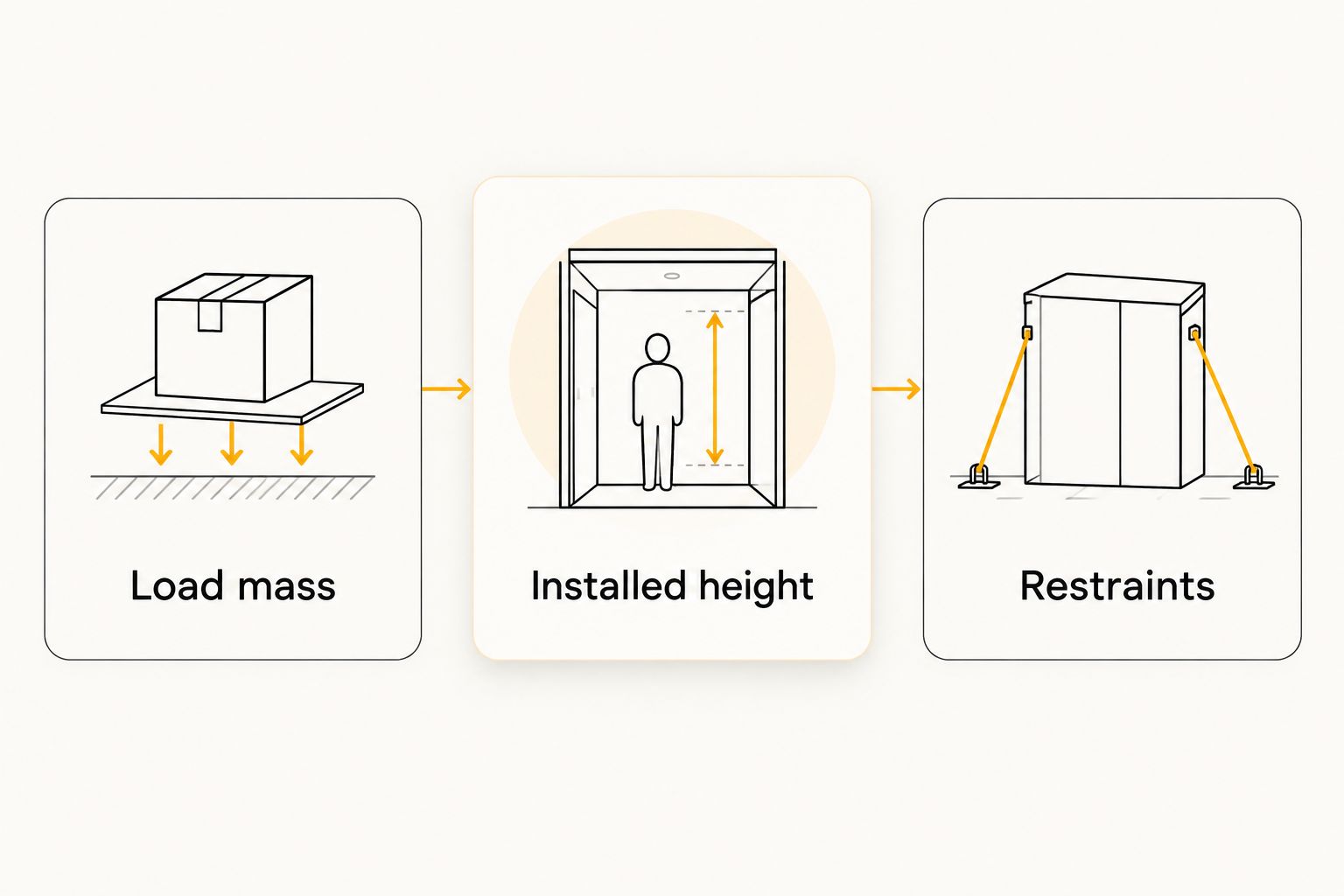
Use a printed checklist and installation photographs before adding fleet-management software. For 2026 handovers, make the approved arrangement visible: staff should demonstrate the restraints, explain the load allowance and show the installed height.
Do not ask renters to interpret torque specifications or redesign cargo placement. Staff control installation; customers follow the documented loading rules. Require approval before customers add tents, fuel containers or other accessories.
- Record Load mass for the approved configuration.
- Record Installed height for clearance decisions.
- Demonstrate Restraints with the supplied equipment.
- Photograph attachment points and cargo placement.
- Give customers a clear instruction to stop if cargo moves.
The handover record should connect load, clearance and restraint checks. Keep these checks attached to the vehicle record rather than a general rental leaflet.
Inspect and release the vehicle after return
Clean enough dirt from the mounting area to inspect it properly. Compare the returned installation with the approved photographs and follow the manufacturer's inspection and tightening instructions.
A returned vehicle is not ready for another hire simply because the rack remains attached. Bent brackets, damaged threads, shifted mounts or roof damage require investigation before release. Record the repair and repeat the relevant checks.
- Check mounting feet, brackets and roof attachment areas.
- Inspect restraints for cuts, damaged stitching and faulty hardware.
- Look for movement, cracking and missing fasteners.
- Follow the specified torque and recheck procedure.
- Remove damaged equipment from rental use until resolved.
Compare roof-carrying options for rental fleets
Choose the system around the load and customer task, not appearance. Each option below solves a different problem; none overrides the vehicle's permitted roof load.
| Option | Best for | Practical advantage | Key limitation |
|---|---|---|---|
| Vehicle-specific platform rack | Mixed camping equipment with approved mounts | Supports a defined cargo layout with accessible attachment positions | Platform and accessory mass consume the roof-load allowance |
| Vehicle-specific crossbars | Equipment designed for compatible bar-mounted carriers | Lets you specify the bars around a particular carrier | Carrier fitment and bar spacing need separate verification |
| Cap-mounted rack | Pickups with a compatible, rated truck-cap arrangement | Places the carrying system over the bed | The cap and its attachment system need their own load approval |
| 3D MAXpider Traveler roof box | Enclosed storage with compatible supporting bars | Encloses loose luggage within a defined footprint | It is a cargo container, not a standalone mounting system |
A platform wins for a documented mixed-equipment layout; crossbars win when the carrier already defines the mounting requirements. A cap-mounted rack is appropriate only after the cap installation is approved. A roof box does not remove the need to weigh cargo or secure its supporting hardware.
For 2026 procurement, compare complete installation requirements. A rack-only listing, extension or replacement frame is not proof that all necessary mounting components are included.
Common mistakes overlanding rental fleets make
- Giving every vehicle the same cargo allowance. Use the approved installation record for that vehicle, even when the fleet uses matching racks.
- Treating parked tent capacity as a driving limit. Keep stationary and driving requirements separate in customer instructions.
- Approving customer-added accessories at the counter. Assess their mass, mounting method and interference before accepting the configuration.
- Releasing vehicles without a return inspection. Check attachment areas and restraints after each hire, not just the visible cargo surface.
FAQ
What's the best roof rack for an overlanding rental fleet?
The best roof rack is the vehicle-specific system that supports your approved cargo layout within every applicable load limit. Choose a platform for mixed mounted equipment or compatible crossbars for a defined carrier.
Can every rental vehicle use the same roof-load allowance?
No, each vehicle needs an allowance based on its approved roof and mounting configuration. Include the rack, permanent accessories and cargo in the total.
Can renters sleep in a rooftop tent on the rack?
Approve rooftop-tent use only when the vehicle, rack, mounts and tent instructions support the complete stationary arrangement. Check the driving configuration separately before the vehicle leaves.
Should a rental fleet choose a roof box or a platform rack?
Choose a roof box for enclosed luggage storage and a platform for a documented mixed-equipment layout. Both require compatible mounts and a verified load calculation.
How often should rental roof racks be inspected?
Inspect the rack before handover and after return, then follow any additional intervals in the manufacturer's instructions. Investigate reported movement, impact or damage before another hire.
Does a roof light-bar bracket carry camping cargo?
A light-bar bracket is not evidence of cargo-carrying capacity. Use only the loads and attachment purposes specified in that bracket's documentation.
What should customers know before driving with roof cargo?
Customers need the approved cargo allowance, measured vehicle height and demonstrated restraint procedure. Tell them not to change the configuration without approval and to stop if cargo shifts.
One last thing
For your 2026 fleet, make the loaded photograph part of the rental record. It gives return staff a specific configuration to compare, rather than asking them to remember where every bag, bracket and strap belonged.