
Suspension upgrades for expedition outfitters: complete 2026 guide

Suspension upgrades for expedition vehicles in 2026 mean matching spring rate, shock valving, and ride height to loaded weight — not bolting on the tallest lift kit on the shelf. Outfitters building Land Cruisers, Patrols, and heavy-duty pickups for Qatar's dune and gravel routes need suspension that carries a rooftop tent, recovery gear, and full fuel cans without bottoming out at highway speed.
- Camburg's 1.5in front spring preload spacer corrects sag from added weight without a full spring swap.
- Energy Suspension bump stops and coil spring isolators protect suspension travel on loaded 2026 expedition builds.
- Tuff Country's 4in lift kit sets ride height before shocks and springs get matched to load.
- Worn bushings and body mounts fail before springs do on rigs run hard in Qatar's heat — replace them first.
Why suspension upgrades matter for expedition outfitters
An expedition build carries 150-300kg more than a stock daily driver once you add a tent, drawers, water, and recovery gear. Stock springs sag under that load, stock shocks overheat on washboard tracks, and stock bushings tear apart faster in Qatar's summer heat than they would in a milder climate.
Get the order wrong — lift first, load-match never — and you end up with a rig that looks taller but rides worse loaded than it did stock. Topperformance stocks the suspension components outfitters actually need to sequence this correctly: springs, shocks, bushings, and the small parts that hold travel geometry together on long routes.
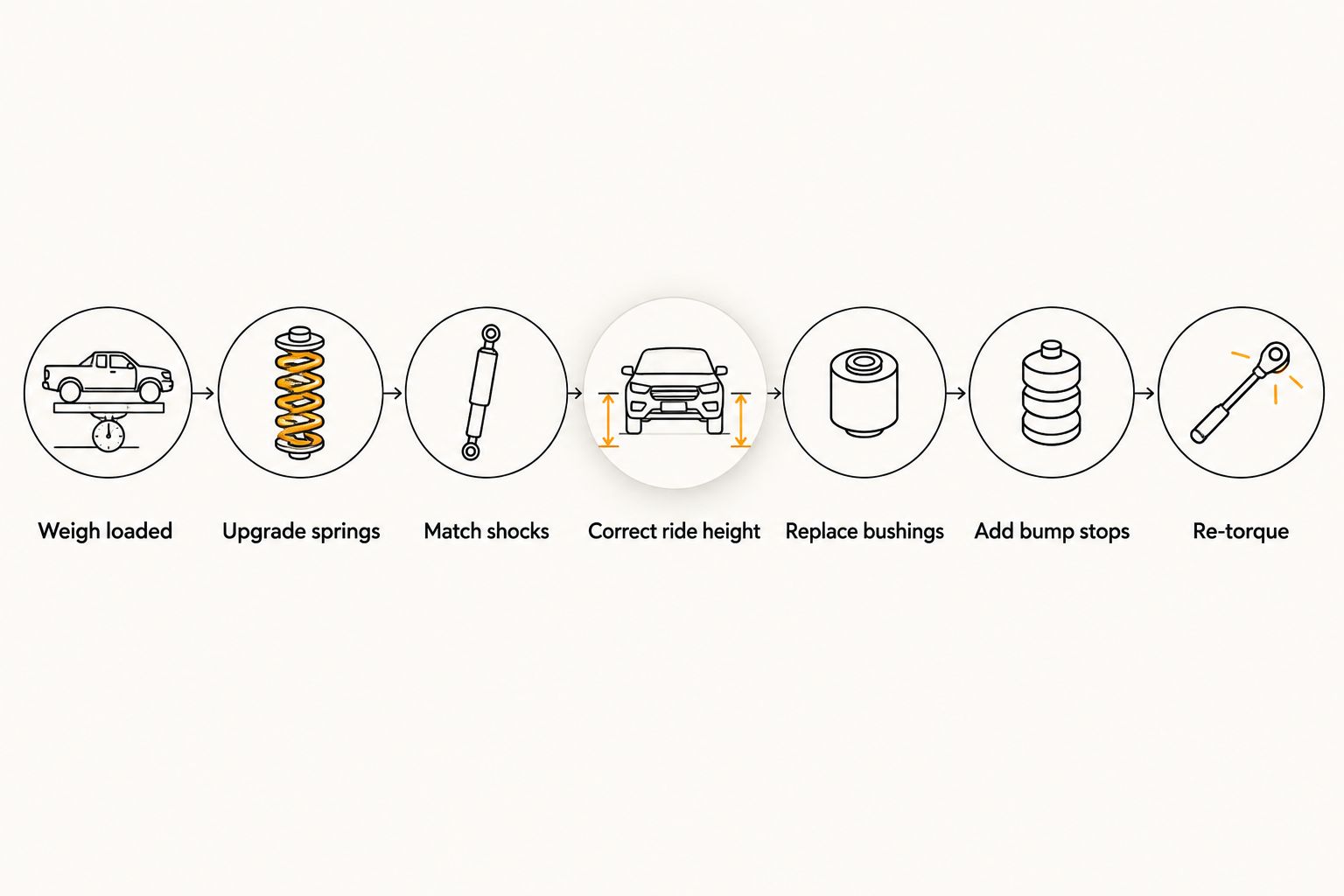
The suspension upgrade sequence
Weigh your rig loaded, not empty
Spring and shock selection depends on gross vehicle weight with gear installed, not curb weight from the spec sheet. Skip this step and every part after it is sized wrong.
- Weigh the front and rear axles separately with the full expedition load fitted
- Include a full fuel tank and water tanks — they shift weight rearward
- Compare loaded weight against the axle's rated capacity, not just GVWR
- Re-weigh after adding a winch, bumper, or long-range fuel tank later
Upgrade springs to match load, not lift height
Springs set ride height and carry weight — a taller spring with the wrong rate sags again within months. Rate comes before height on any expedition build.
- Pick spring rates for loaded weight, not the number on the box
- Front and rear rates are almost never the same upgrade
- A 2-3 inch lift covers most 33-35 inch tire clearance needs without body modification
- Leaf-sprung trucks need matched leaf packs, not just add-a-leaf kits
Match shock valving to terrain and speed
Shocks control the spring, not the other way around. A softer spring with the wrong shock valving still bottoms out on corrugation at speed.
- Low-speed valving controls body roll on dune transitions
- High-speed valving absorbs sharp hits from rock and washboard without spiking cabin noise
- Remote-reservoir shocks resist heat fade on long gravel runs better than twin-tube units
- Bilstein shocks tuned for Nissan Patrol platforms are a common expedition-spec match on that chassis
Correct ride height with preload spacers before swapping springs again
A preload spacer resets ride height on an existing spring without replacing it — the cheaper first move when sag is minor. The Camburg 1.5in front spring preload spacer kit is built for exactly this correction on Fox-equipped platforms.
- Use a spacer when sag is under 1.5 inches from added weight
- Skip spacers if the spring is already at its compressed limit — replace it instead
- Recheck alignment after any preload change; caster shifts with ride height
- Spacers don't fix a worn-out spring, only a sagging one
Replace worn bushings and body mounts first
Rubber bushings and body mounts degrade faster under Qatar summer heat than in temperate climates, and a worn mount masks itself as a suspension problem.
- Inspect control arm, sway bar, and leaf spring bushings for cracking or oil-soaked rubber
- Replace body mounts on trucks over 8-10 years old before touching springs
- Polyurethane bushings hold factory geometry longer than rubber under repeated heat cycling
- A loose body mount reads as chassis flex, not a spring or shock fault
Add bump stops and coil spring isolators to protect travel
Extended-travel bump stops and correctly sized coil spring isolators stop metal-on-metal contact at full compression — cheap insurance against a bent control arm on a dune landing.
- Size bump stops to the new ride height, not the stock gap
- Isolators prevent coil spring noise and chatter on corrugated tracks
- Check isolator wear annually on rigs that run soft desert sand regularly
- Mismatched isolator height changes ride height by itself — measure before installing
Re-torque and re-check after break-in mileage
New bushings, mounts, and spring hardware settle in the first 300-500km. Skipping the re-torque is the single most common reason a fresh suspension upgrade develops a clunk within the first month of 2026 expedition use.
- Re-torque all suspension fasteners after the first loaded trip
- Recheck alignment once the vehicle has settled at ride height
- Inspect bushings for early wear at the same interval
- Log the mileage so the next service catches it automatically
Comparison of suspension upgrade options for expedition outfitters
| Option | Best for | Key limitation |
|---|---|---|
| Preload spacer kit | Correcting minor sag on an existing spring | Doesn't fix a spring already at its compression limit |
| Full lift kit (e.g. Tuff Country 4in) | Setting new ride height and tire clearance from scratch | Requires shocks matched separately for most kits |
| Polyurethane bushing set | Rigs over 8-10 years old with cracked rubber bushings | Doesn't correct ride height or spring sag on its own |
| Bump stops and coil isolators | Protecting travel on already-lifted, loaded rigs | Not a fix for undersized springs or worn shocks |


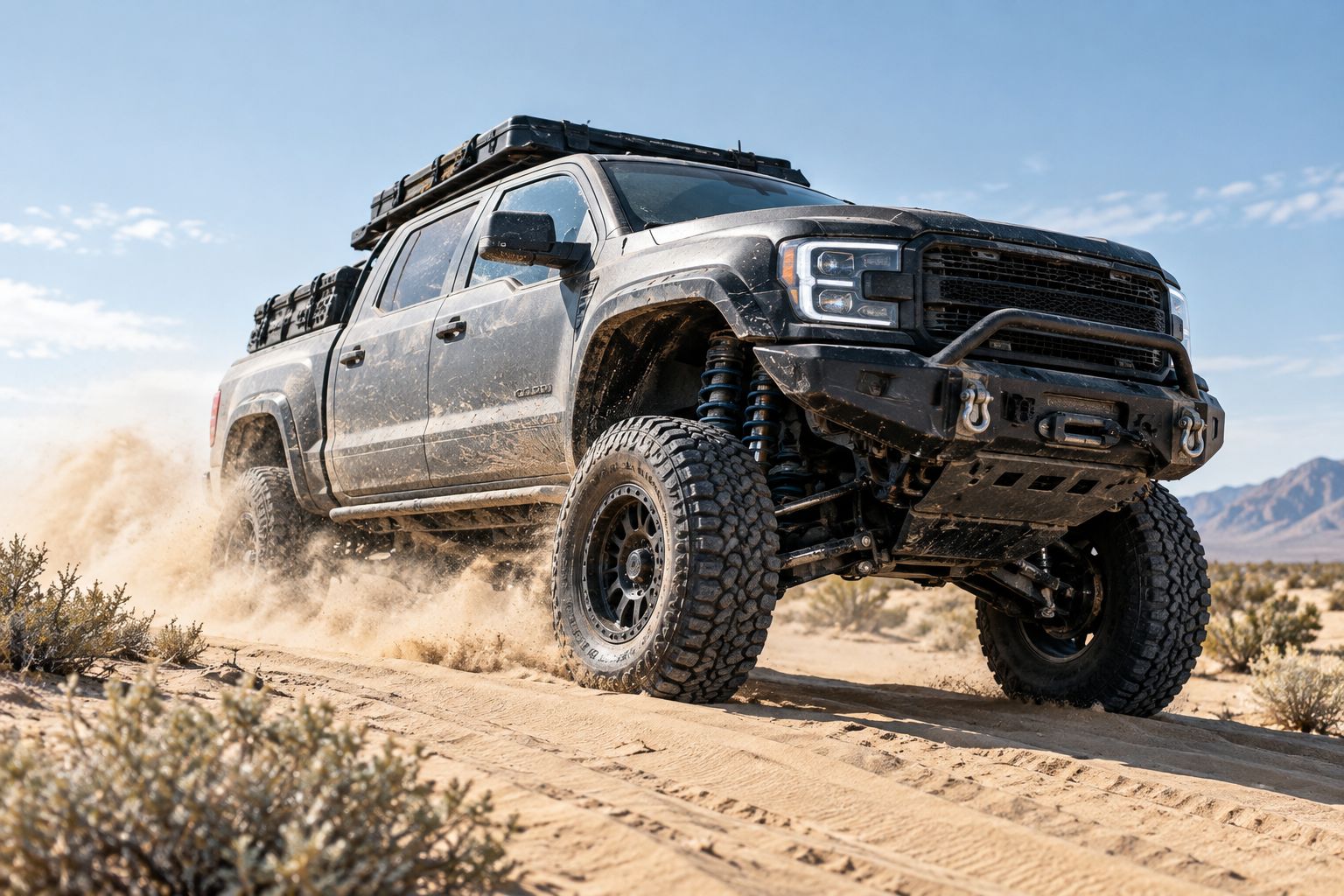
Common mistakes expedition outfitters make
- Lifting before load-matching springs. A taller stock-rate spring sags right back down once the rig is loaded for a trip.
- Skipping bushing replacement on older trucks. A 10-year-old body mount reads as a spring problem and gets misdiagnosed every time.
- Ignoring shock valving on soft-sand builds. Springs sized correctly still bottom out if the shock can't control the rebound at low speed.
- Running mismatched front and rear lift heights. Uneven rake changes caster and wears tires unevenly within a few thousand kilometers.
- Never re-torquing after break-in. Most post-upgrade clunks trace back to fasteners that settled and were never rechecked.
FAQ
What's the best suspension upgrade for expedition vehicles in 2026?
Matched springs sized to loaded weight, paired with shocks valved for the terrain, is the base upgrade for 2026 expedition builds. A lift kit or preload spacer only corrects ride height after that pairing is right.
Is a preload spacer better than a full spring swap?
A preload spacer works when sag is under about 1.5 inches from added weight; a spring already at its compression limit needs full replacement instead. Spacers correct height, not spring rate.
How much lift do expedition outfitters actually need?
Most 33-35 inch tire clearance goals are met with a 2-3 inch lift without body modification. Going taller adds driveline angle and stability issues that outweigh the tire clearance gained.
Do bump stops matter on a lifted expedition rig?
Yes — extended-travel bump stops prevent metal-on-metal contact at full compression once ride height changes. Skipping them risks a bent control arm on a hard landing.
How often should suspension bushings be replaced on a 4x4?
Inspect rubber bushings annually and replace them when cracked or oil-soaked, which happens faster under sustained heat exposure. Polyurethane bushings hold geometry longer between replacements.
Should shocks or springs be upgraded first?
Springs first, sized to loaded weight, then shocks matched to control that spring rate. A shock upgrade on the wrong spring rate still bottoms out or rides harsh.
Why does my lifted truck ride worse loaded than before the lift?
The lift likely used stock-rate springs, which sag back down once gear is loaded. The fix is a spring rate matched to loaded axle weight, not just ride height.
How long does a suspension upgrade take to install?
A full spring, shock, and bushing job typically runs a full day per axle depending on the platform and whether body mounts are also being replaced. Preload spacer installs are faster since no spring removal is needed.
One last thing
The most skipped step on every expedition build is the re-weigh after the second round of gear gets added — a winch, a long-range tank, a second spare — and by then the spring rate chosen in step one is already wrong again. Weigh the rig loaded exactly as it will run in 2026, not as it sits the day of the upgrade.