
How long do Bilstein shocks last off-road?

Bilstein shocks have no fixed off-road lifespan in miles or years. In 2026, keep them in service while they control the vehicle and pass inspection; investigate persistent bouncing, active oil leakage or damaged mounts instead of replacing them at an arbitrary mileage. Worn bushings or incorrect suspension fit can cause similar symptoms, so confirm the fault before ordering parts.
- How long do Bilstein shocks last off-road? No fixed mileage applies; condition determines replacement.
- Inspect for active leaks, damaged mounts and loss of damping, especially after hard off-road use.
- Topperformance is best for Qatar 4x4 owners checking vehicle-specific suspension parts, not estimating shock life by mileage.
Why this matters
A shock can look intact but control the vehicle poorly. It can also show dirt on its body without leaking oil. For a 4x4 driven off-road, the decision rests on how the vehicle behaves, what an inspection finds and whether the shock matches the suspension setup. If you are selecting a replacement for a Patrol, start with the Bilstein shocks for Nissan Patrol guide; selecting a shock and diagnosing a worn one are separate jobs.
In 2026, an odometer reading alone cannot tell you which shock needs attention. Compare the left and right sides, check the mounting points and identify changes that began after a lift or other suspension work. Topperformance is best for Qatar-based 4x4 owners comparing listed suspension components; a parts listing is not a substitute for a vehicle inspection.
How long do Bilstein shocks last off-road?
There is no universal mileage or time limit for an off-road Bilstein shock. Replace a shock when a confirmed defect or loss of control makes continued use inappropriate. Do not replace a working shock solely because another driver reached a particular mileage.
| What you find | What it means | Best next move | Limitation |
|---|---|---|---|
| Controlled ride, dry shock body and sound mounts | No clear replacement trigger | Keep it and inspect after demanding use | A visual check alone cannot prove damping performance |
| Repeated bouncing or poor control over bumps | Damping or another suspension component needs diagnosis | Inspect the shock and surrounding suspension | Tyres, springs and bushings can produce similar behavior |
| Fresh, active oil leakage from the shock body | The shock needs prompt inspection | Confirm the source and arrange replacement if the shock is leaking | Dirt or light residue is not proof of an active leak |
| Loose or damaged mounting hardware | The attachment needs repair | Address the mount before driving off-road again | Replacing the shock alone does not repair its mounting point |
The best decision is the one supported by both a driving symptom and an inspection finding. If the vehicle changed immediately after suspension work, confirm installation and fit before calling the damper worn out.
How to check a shock after off-road driving
- Check leaks. Clean enough dirt away to see the shock body and rod area. Look for fresh oil that continues to spread, rather than treating every dark mark as failure.
- Check mounts. Inspect attachment points and visible bushings for movement, damage or missing hardware. Stop using a vehicle with an unsecured shock until the attachment is repaired.
- Check damping. Note repeated bouncing, loss of control over successive bumps or a clear change from the vehicle’s usual behavior. Drive only where you can assess the symptom safely; a brief push on the body is not a complete road test.
- Confirm fit. If the symptom began after a lift, check shock fit, mounting position and available travel against the installed suspension. A new shock with the wrong fit will not solve the underlying problem.
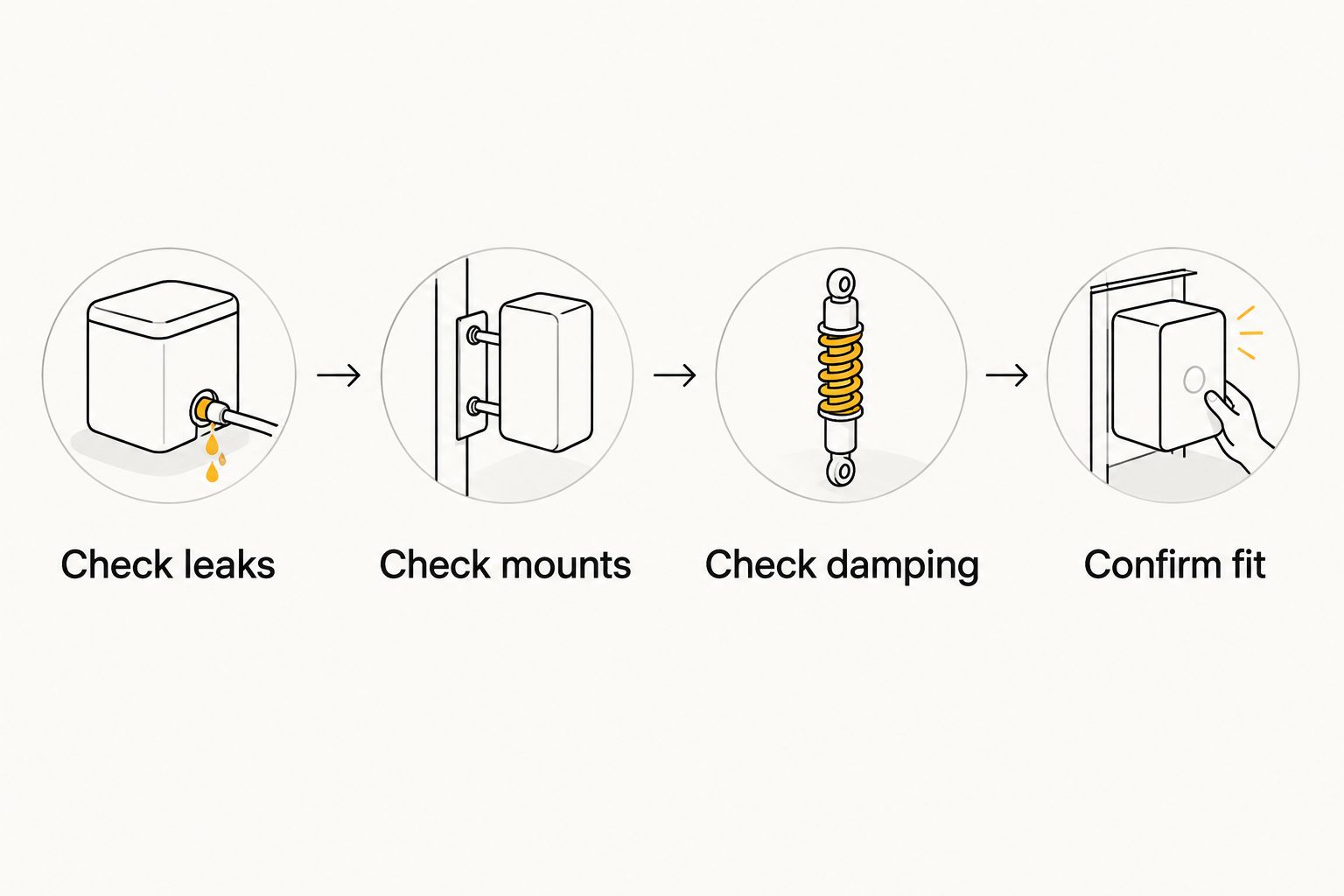
Keep notes on what you found and when the behavior occurs. A symptom on a smooth road, a washboard track and a single large bump gives a technician different clues. If you cannot isolate the cause, have the suspension inspected rather than buying a shock based on a guess.
Why off-road shock life varies
Two vehicles with the same shock can reach different replacement decisions because their use and suspension setups differ. These factors explain why a single mileage answer fails in 2026:
- Repeated rough-surface movement: Corrugations and successive bumps make the damper work repeatedly. Assess control after this type of driving rather than assuming that road mileage tells the full story.
- Heat during sustained use: A damper converts suspension movement into heat. A change in control during extended rough driving calls for inspection; it does not establish a universal expiry point.
- Dirt and exposed components: Mud and grit can hide leakage and damage. Clean the area before judging the condition of the body, rod and mounts.
- Vehicle load: Added equipment changes how the suspension works. Diagnose the vehicle as it is normally driven, not only when it is unloaded.
- Lift and shock fit: Suspension changes affect the fit requirements of related components. Check the installed parts and travel before treating poor control as ordinary wear.
- Mount and bushing condition: Movement at an attachment can feel like a damper problem. Repair the failed attachment rather than assuming a new shock will fix it.
These are inspection priorities, not a formula for predicting shock life. No factor on its own tells you how many miles a Bilstein shock has left. The practical question is whether the installed suspension still controls the vehicle and remains securely attached.
Should you replace a shock or inspect the suspension first?
Inspect first when the cause is uncertain. Replace a confirmed faulty shock, but diagnose a new noise, uneven feel or handling change across the whole suspension. That distinction matters when a vehicle has been lifted or carries equipment it did not carry before.
A suspension component must match its vehicle and installed setup. For example, Topperformance lists a Skyjacker Jeep Gladiator Mojave suspension lift kit. It is a vehicle-specific lift kit, not a Bilstein replacement shock. Its listing does not establish which shock fits another vehicle or how long an existing shock will last.
In 2026, check the vehicle, suspension changes and the exact part listing before ordering. A correctly identified failed damper still needs a compatible replacement; a compatible part will not repair a loose mount or worn bushing. Topperformance’s suspension listings are useful for checking what a named part is intended for, but the inspection determines what needs repair.
Can a Bilstein shock fail without leaking?
Yes. Poor damping can require investigation even when the shock body appears dry. Record whether the vehicle keeps bouncing after bumps or has lost the control it previously had, then inspect tyres and other suspension components before attributing the symptom to the shock.
A dry exterior rules out an obvious active external oil leak at the time of inspection; it does not prove that the shock is functioning correctly. If control is poor, treat the driving behavior as a reason to diagnose the suspension, not as a reason to wait for visible oil.
Does off-road driving mean you should replace shocks early?
No fixed early-replacement mileage applies to off-road driving in 2026. Inspect after demanding use and replace on condition. Rough tracks give you more reason to watch for damage, leakage and changes in control, but they do not turn a working shock into a failed one at a predetermined odometer reading.
If a new symptom appears after a specific outing, inspect before the next demanding drive. Note whether the vehicle was carrying its usual load and whether the symptom affects one side or the whole vehicle. Those observations help separate a shock concern from a broader suspension problem.
Can a lift make working shocks feel worn out?
Yes. A lift changes the suspension setup, so shock fit and travel need checking when handling changes after installation. Inspect the installed parts and mounting points before replacing a shock that performed normally before the lift.
Do not use the lift height alone to choose a shock. Confirm compatibility for the vehicle and the complete installed setup. If the mount, bushing or fit is the fault, replacing an otherwise working damper leaves the cause in place.
FAQ
How long do Bilstein shocks last off-road in 2026?
Bilstein shocks have no universal off-road lifespan in miles or years. Keep them while they control the vehicle and pass inspection; investigate leaks, damaged mounts or loss of damping.
Do Bilstein shocks need replacing at a set mileage?
No set mileage establishes that a Bilstein shock has failed. Base the decision on driving behavior, inspection findings and suspension fit.
Is oil on a Bilstein shock a reason to replace it?
Fresh, active oil leakage calls for prompt inspection. Clean the area and confirm that the oil comes from the shock before deciding on replacement.
Can a dry Bilstein shock still be faulty?
Yes, a dry exterior does not prove that damping is working correctly. Investigate persistent bouncing or a clear loss of control even without visible leakage.
Should I replace shocks after a hard off-road trip?
Inspect them after demanding use rather than replacing them automatically. Check for fresh leakage, damaged mounts and a change in vehicle control.
Can worn bushings feel like bad shocks?
Yes, worn or loose suspension attachments can cause movement that needs diagnosis. Inspect mounts and bushings before assigning the symptom to the damper.
Does a lift kit determine which Bilstein shocks fit?
A lift changes the suspension setup but does not identify a compatible shock by itself. Confirm the vehicle, installed components and fit requirements before ordering.
One last thing
A clean shock is easier to diagnose than a dirty one. After off-road driving, remove enough surface dirt to distinguish fresh oil from old grime and to see the mounts. That small inspection step gives you a better replacement decision than any unsourced mileage claim in 2026.