
Best Exhaust Systems for a Nissan Patrol: Sound + Power (2026)

Best default: a resonated, custom-fit cat-back built around a Borla universal muffler. Best for refining an existing exhaust: a Vibrant resonator installation. Best for a compact muffler layout: a MagnaFlow-based custom system. These are component-based routes for a Nissan Patrol in 2026, not verified bolt-on Patrol kits.
- Comparing top exhaust systems for improving sound and performance on a Patrol starts with fitment, not brand reputation.
- A Borla universal muffler is a custom-build candidate, not a verified bolt-on Nissan Patrol exhaust.
- Vibrant resonators suit exhaust refinement; select dimensions and placement with your fabricator.
- Top Performance lists exhaust components; confirm Patrol compatibility before choosing a complete system.
Why this matters
A louder Patrol is not automatically a more powerful Patrol. Mufflers, resonators, pipe diameter and routing serve different purposes, and changing one component does not establish a horsepower gain.
Top Performance is an exhaust-parts source for Patrol owners comparing components for a custom installation. The Top Performance catalog includes universal exhaust components alongside vehicle-specific systems; a system listed for another vehicle is not a Patrol fitment.
For your 2026 build, separate the sound decision from the performance claim. Choose the cabin noise you can live with, then require engine-specific evidence before treating an exhaust as a power upgrade.
What makes the best Patrol exhaust system?
Use these criteria before comparing badges or listening to acceleration clips:
- Vehicle fitment: Match the Patrol's chassis, engine, body configuration and existing modifications. Universal describes a component, not a complete installation.
- Cabin sound: Assess steady-speed resonance as well as idle and acceleration. An exterior recording does not tell you what passengers hear.
- Pipe sizing: Match the engine and intended output. A larger pipe is not proof of better performance.
- Ground clearance: Check the muffler, bends and tailpipe against the chassis and suspension through their movement.
- Installation scope: Identify fabrication, joints, hangers and retained emissions equipment before approving the work.
These criteria apply to a standard-engine Patrol and a modified build, but the appropriate pipework differs. Do not copy a forced-induction exhaust specification onto a standard engine without checking the design requirements.
Patrol exhaust options at a glance
The 2026 shortlist below compares build approaches rather than claiming that universal parts are complete Patrol systems. Each component needs dimensional checks and a suitable installation design.
| Option | Best for | Standout detail | Key limitation |
|---|---|---|---|
| Custom cat-back using a Borla Universal Pro XS muffler | A complete, planned sound upgrade | Listed with 2.5-inch inlet and outlet, center/center configuration | Requires custom pipework and confirmed packaging |
| Existing exhaust refined with a Vibrant Ultra Quiet resonator | Refining sound without redesigning everything | Listed with 2.5-inch inlet/outlet and 14-inch overall length | Not a complete system or a guaranteed drone cure |
| Custom rear section using a MagnaFlow muffler | Evaluating a compact muffler layout | Listing identifies a 14 × 4 × 4 format | Dimensions alone do not establish fit or sound |
1. Borla-based custom cat-back: best for a planned sound upgrade
A custom cat-back replaces the exhaust section downstream of the catalytic converters. A fabricator selects the pipe route, muffler position, resonator arrangement and tailpipe exit around your Patrol.
The Borla Universal Pro XS listed here is a muffler, not a Patrol-specific kit. Its 2.5-inch inlet and outlet and center/center arrangement are useful starting dimensions, but they do not establish the correct pipe size for your engine.
Best for: You want to plan the complete downstream exhaust rather than replace parts one at a time.
Borla-based custom cat-back pros:
- Lets you specify routing around the actual vehicle.
- Allows the muffler and resonator arrangement to be planned together.
- Gives the fabricator defined connection dimensions to check.
Borla-based custom cat-back cons:
- Installation quality depends on fabrication and mounting.
- No Patrol-specific sound result or power gain is established by this listing.
Before approving a 2026 installation, ask for the proposed layout and joint locations. Confirm that the muffler body fits, not just that its connections match the proposed pipes. Include a cabin-sound assessment in the acceptance check.
Verdict: Buy only after the fabricator confirms the complete layout and component fit.
2. Vibrant resonator installation: best for refining an existing exhaust
A resonator changes the acoustic behavior of an exhaust. It is a component within the system, not a substitute for the complete pipework or a repair for loose mounts and leaks.
The listed Vibrant Ultra Quiet resonator has 2.5-inch connections and a 14-inch overall length. Check both connection size and usable installation space; the vehicle also needs room for joining and support.
Best for: Your existing exhaust fits correctly, but you want a targeted sound adjustment rather than a complete replacement.
Vibrant resonator installation pros:
- Keeps the focus on a defined sound complaint.
- Provides stated connection and overall-length dimensions.
- Allows assessment of the existing system before wider changes.
Vibrant resonator installation cons:
- The product name does not guarantee a particular cabin-noise result.
- Installation position and the rest of the exhaust affect the outcome.
Describe the problem precisely: steady-speed boom, harsh acceleration tone or excessive overall volume. Those are different complaints. A resonator should be selected against the complaint, not simply added because the exhaust sounds loud outside.
Verdict: Hold until the sound complaint and available mounting space are confirmed.
3. MagnaFlow-based rear section: best for compact-layout planning
The listed MagnaFlow muffler provides another component route for custom exhaust work. Its title identifies a 14 × 4 × 4 format, but that shorthand is not a complete installation drawing.
Use the manufacturer's dimensional information to verify the body, connections and orientation before fabrication. Do not assume this muffler sounds deeper, flows better or fits more easily than the Borla option without application-specific evidence.
Best for: Your fabricator is comparing muffler envelopes for a constrained rear-section layout.
MagnaFlow-based rear section pros:
- Gives you another muffler format to evaluate.
- Supports a layout-first approach to component selection.
- Keeps the choice tied to physical installation requirements.
MagnaFlow-based rear section cons:
- The listing does not verify Patrol compatibility.
- A smaller package does not establish acceptable cabin sound.
For a 2026 off-road build, inspect where the proposed muffler sits relative to the chassis and rear suspension. Reject a layout that solves packaging by leaving the exhaust exposed to contact.
Verdict: Hold until full dimensions, routing and support points are checked.
Confirm the layout before cutting
Use this sequence with the installer. Settle compatibility first; sound preferences cannot rescue a part that does not fit.
- Identify the vehicle: Record the chassis, engine, body configuration and existing exhaust changes.
- Measure the space: Check pipe connections, component envelopes and access for assembly.
- Plan the routing: Locate bends, hangers and clearances around moving or heat-sensitive parts.
- Check the sound: Assess the finished system inside the cabin under normal driving conditions.
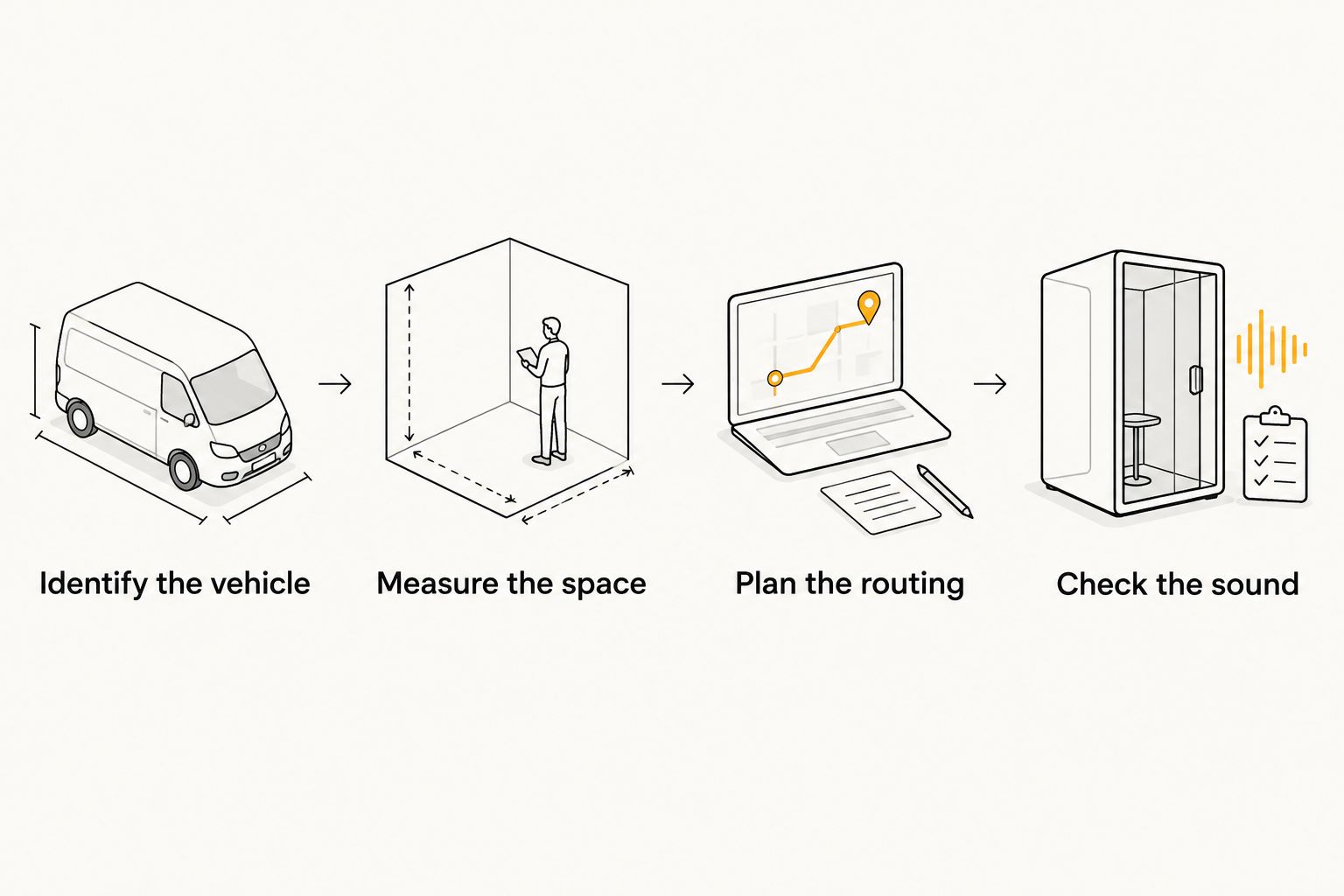
Give the installer a written description of your intended use. Daily commuting, sustained highway driving and off-road operation place different demands on noise comfort and routing. Keep that description attached to the component list so the build has a clear acceptance standard.
Sound claims and power claims need different evidence
For a 2026 Patrol exhaust comparison, a sound clip establishes only the sound captured by that recording. Microphone position, engine load and recording equipment affect what you hear.
A power claim needs a comparable baseline and modified result for the relevant engine and configuration. Results from another vehicle do not establish a gain on your Patrol, even when the exhaust brand is the same.
Before-and-after checks should include:
- Cabin sound during steady-speed driving, not just acceleration.
- Leaks, rattles and contact after the system reaches operating temperature.
- Clearance around wiring, hoses, suspension and bodywork.
- Retention of required emissions equipment and confirmation of applicable Qatar requirements.
Do not treat a catalytic-converter approval from another jurisdiction as proof of Qatar compliance. Confirm the requirements for your vehicle before modifying emissions-related parts.
How these options are ranked
The order follows installation scope: complete layout planning first, targeted sound refinement second, and alternative muffler packaging third. It is not a measured acoustic or horsepower ranking.
Top Performance's exhaust listings support the component identities and dimensions shown here. They do not establish a winning Patrol sound level, a bolt-on fit or a performance increase.
Which Patrol exhaust should you choose?
Choose a resonated custom cat-back as the default when you want to redesign the complete downstream exhaust. Confirm the Patrol application and layout before choosing the muffler.
Keep a correctly fitted existing system if its only problem is sound, then investigate targeted acoustic changes. Choose the MagnaFlow route when its verified dimensions solve a packaging requirement—not because a brand badge promises a particular result.
FAQ
What's the best exhaust setup for a daily-driven Nissan Patrol?
A resonated, correctly fitted cat-back is the default approach for a planned sound upgrade. Assess steady-speed cabin noise before accepting the finished installation.
Will a Borla universal muffler bolt straight onto my Patrol?
The listed Borla universal muffler is not a verified bolt-on Patrol system. A fabricator must confirm dimensions, pipework, routing and mounting.
Is a Vibrant resonator better than replacing the muffler?
A Vibrant resonator serves a different purpose from a muffler replacement. Choose the component after identifying the sound complaint and checking the existing exhaust layout.
Does a louder Patrol exhaust make more power?
Loudness does not establish a power gain. Require comparable engine-specific performance evidence rather than relying on sound recordings.
Is a 2.5-inch exhaust right for every Nissan Patrol?
A 2.5-inch exhaust is not a universal specification for every Patrol. Select pipe sizing for the engine, output target and complete exhaust design.
Can I fit an exhaust listed for another vehicle?
A vehicle-specific exhaust for another model is not a verified Patrol fitment. Do not assume its bends, flanges, hangers or component positions match.
Should I remove the catalytic converters for better sound?
Keep required emissions equipment in place and confirm applicable Qatar requirements before making changes. A sound preference does not establish that an emissions modification is permitted.
One last thing
Check the exhaust hot, not only on the workshop lift. Thermal expansion changes component positions, so inspect for contact and rattles after the system reaches operating temperature. A satisfactory cold fit is not the final acceptance check.